Just as you're pondering which wine to serve at your next gathering, you've stumbled upon the perfect opportunity to elevate your wine knowledge beyond casual sipping. You don't need to be a sommelier to appreciate wine's complex characteristics, but you'll benefit from understanding the systematic approach that transforms ordinary tasting into a refined experience. Whether you're interested in impressing friends or developing your palate professionally, mastering the fundamentals of wine tasting will open up a world of subtle flavors and aromatic nuances you've never noticed before. Let's start your journey into proper wine appreciation.
Key Highlights
- Use ISO-standard tulip-shaped glasses and a white backdrop to properly assess wine color and aromas during tasting.
- Serve wines at optimal temperatures: reds at 60-65°F, whites at 45-50°F, and sparkling at 40-45°F.
- Examine color against a white background at 45 degrees, noting intensity, clarity, and age indicators.
- Follow the systematic Look-Smell-Taste approach, paying attention to aromas, flavors, and structural components.
- Document tasting notes with producer details, visual observations, aromatic profiles, and taste components for future reference.
The Essential Wine Tasting Equipment
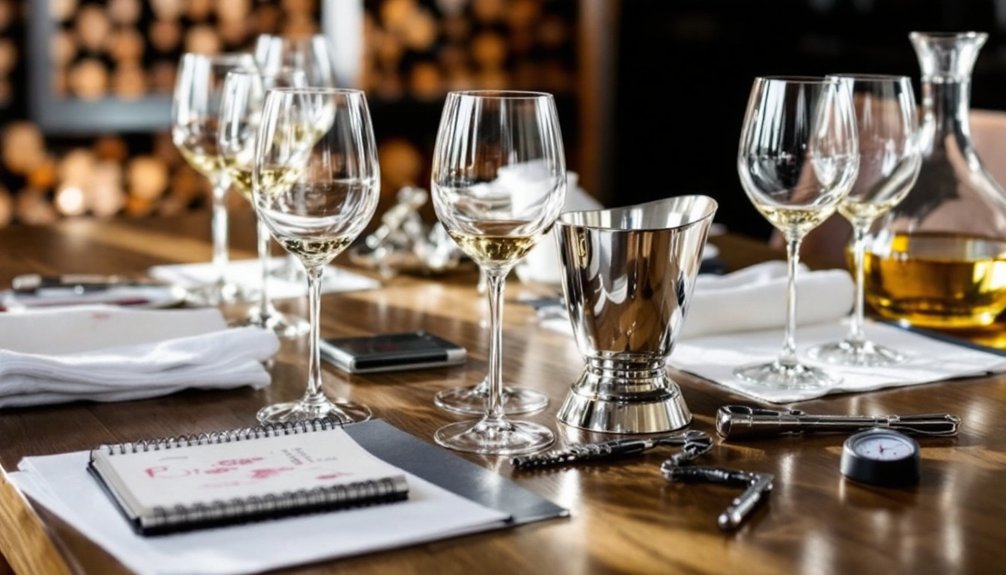
When setting up for wine tasting, you'll need several key pieces of equipment to secure a proper evaluation. The most important item is proper stemware – ISO-standard wine glasses with tulip-shaped bowls that concentrate aromas and allow proper swirling. You'll want separate glasses for different wine types, particularly for reds and whites.
A white tablecloth or light-colored placemat serves as your neutral backdrop, helping you assess the wine's true color and clarity.
Don't forget a spittoon or dump bucket – it's vital for professional tasting, allowing you to evaluate multiple wines without becoming intoxicated. You'll also need a wine thermometer to confirm proper serving temperatures: 45-50°F for whites and 60-65°F for reds.
Keep your tasting notebook and pen handy to record your observations, and consider investing in an aroma wheel for reference.
A decanter is valuable for older reds that need aeration, while a tastevin (though traditional) isn't necessary for modern tasting.
Finally, make certain you've got proper lighting – natural daylight is ideal, but a good LED light source at 5000K color temperature will work well.
Understanding Wine Glass Basics
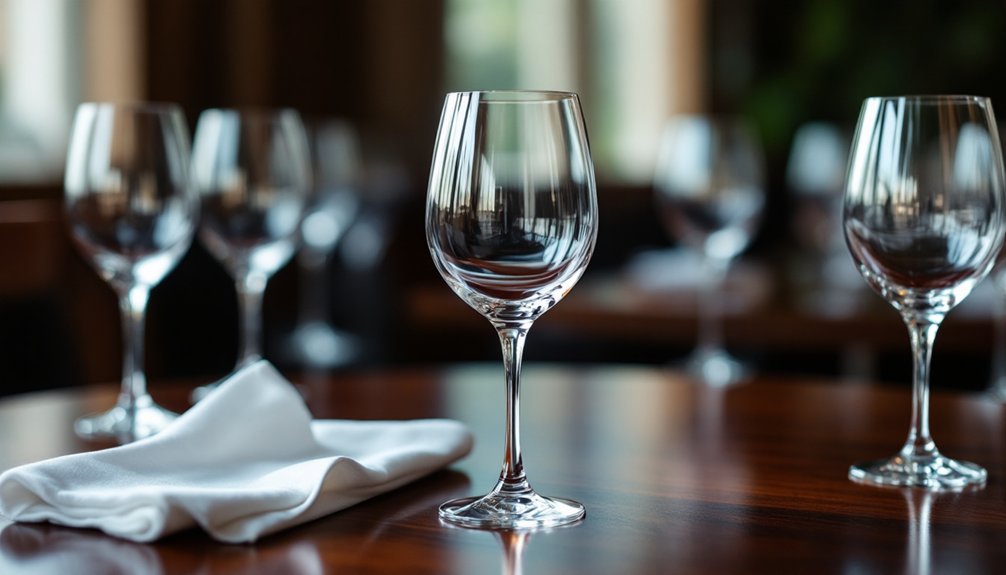
Among all your wine tasting equipment, the wine glass stands as your most important tool. The right glass can enhance your wine's aromas and flavors, while the wrong one might mask its true character.
Today's wine glasses have evolved considerably since their 17th-century origins, with manufacturers like Riedel pioneering shape-specific designs for different varietals.
When selecting your wine glasses, you'll need to take into account these essential characteristics:
- Bowl shape: A wider bowl allows red wines to breathe, while narrower bowls preserve white wine aromas
- Rim diameter: Thinner rims direct wine precisely to your palate and create a more elegant drinking experience
- Stem length: A longer stem prevents hand temperature from affecting the wine's temperature and allows proper swirling
- Crystal quality: Lead-free crystal offers clarity for visual assessment while maintaining durability
You don't need to invest in dozens of specialized glasses to start.
Begin with a versatile Bordeaux-style glass for reds and a standard white wine glass. These will serve you well for 90% of your tastings, and you can expand your collection as your expertise grows.
Proper Wine Temperature
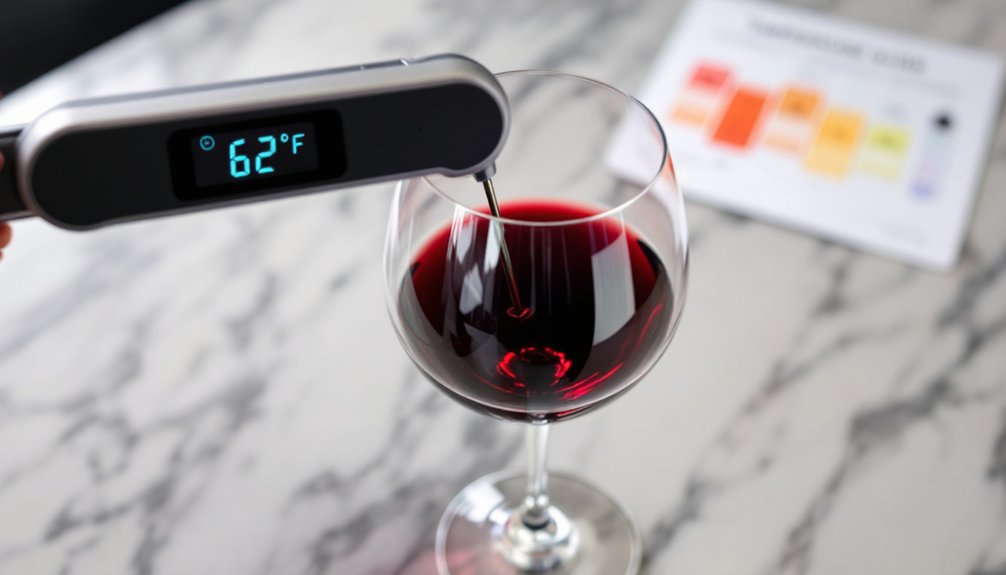
Temperature plays an essential role in how you'll experience a wine's aromas, flavors, and structural components. When served too warm, wine's alcohol becomes more pronounced, masking its subtle characteristics, while overly chilled wine can suppress its aromatic complexity and taste.
For red wines, you'll want to aim for specific serving ranges: full-bodied reds like Cabernet Sauvignon should be served at 60-65°F (15-18°C), while lighter reds such as Pinot Noir are best at 55-60°F (13-15°C).
White wines require cooler temperatures, with crisp varieties like Sauvignon Blanc showing best at 45-50°F (7-10°C), and fuller-bodied whites like oaked Chardonnay at 50-55°F (10-13°C).
Sparkling wines need the coldest serving temperature at 40-45°F (4-7°C) to preserve their bubbles and freshness.
You can achieve these temperatures by removing whites from your refrigerator 10-15 minutes before serving, while reds might need 15-20 minutes in the fridge to cool down from room temperature.
If you're in a hurry, an ice bucket with water and ice will chill a bottle in about 20 minutes.
Observe Color and Clarity
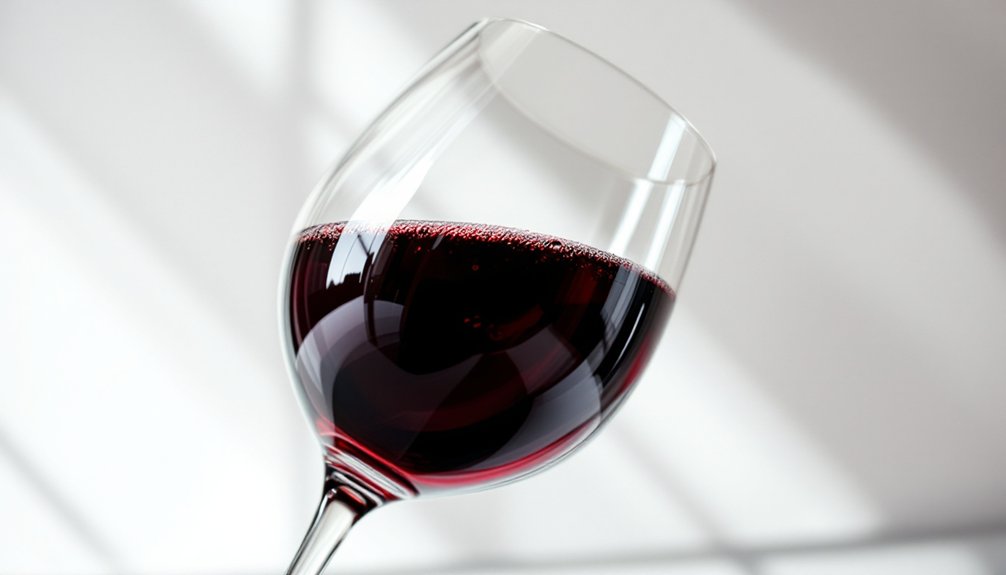
With your wine now at its ideal temperature, it's time to examine its visual characteristics. Hold your glass at a 45-degree angle against a white background, preferably in natural daylight or under neutral lighting.
You'll want to assess both the wine's color and its clarity, as these visual cues reveal important details about the wine's age, varietal, and overall condition.
When examining your wine's appearance, look for these key characteristics:
- Color intensity, which ranges from pale and water-white in young Pinot Grigios to deep purple in young Syrahs
- Color variation from rim to center, where older wines typically show more amber or brick tones at the edges
- Clarity and brightness, indicating whether the wine is filtered, unfiltered, or possibly flawed
- Viscosity, observed through the wine's "legs" or "tears" that form on the glass when swirled
You'll notice that white wines deepen in color as they age, moving from pale yellow to golden amber, while red wines typically fade from deep purple to tawny brown.
These visual clues help you anticipate the wine's characteristics before you even take your first sip.
Swirling With Purpose
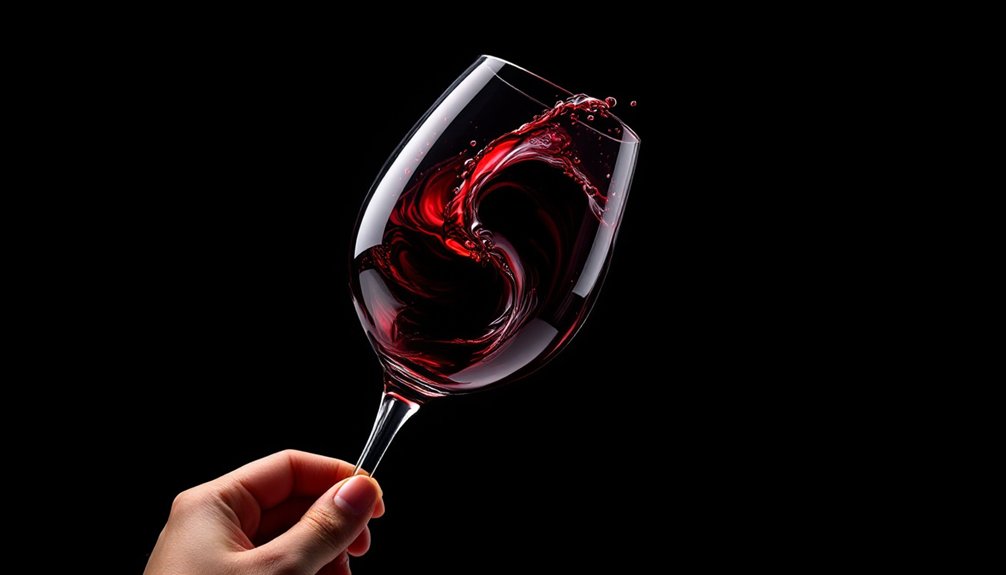
Swirling your wine glass serves multiple essential purposes beyond its ceremonial appearance. It's a vital technique that releases the wine's aromatic compounds, allowing you to experience its full bouquet while also helping you evaluate the wine's body and alcohol content through its "legs" or "tears" that form on the glass walls.
To swirl effectively, you'll want to keep your glass on a flat surface at first, holding the stem between your thumb and first two fingers. Make small, gentle circular motions with your wrist, allowing the wine to climb roughly halfway up the glass sides.
Once you're comfortable with this motion, you can try swirling while holding the glass in mid-air. You'll notice that different wines create distinct patterns – fuller-bodied reds like Cabernet Sauvignon tend to leave more pronounced legs that flow slowly, while lighter wines like Pinot Grigio create faster-moving, delicate trails.
Don't worry if you're not perfect at first; it's better to start with a less-filled glass (about one-third full) to avoid any spills while you're mastering this vital tasting technique.
Exploring Wine Aromas
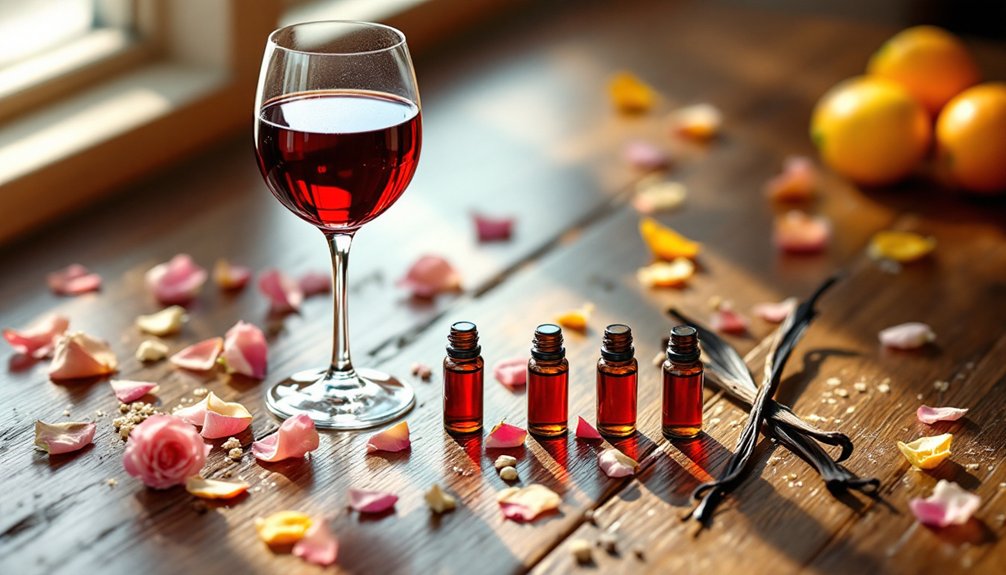
A wine's aroma tells a complex story of its origin, grape variety, and winemaking process. When you lift the glass to your nose, you'll discover layers of scents that reveal the wine's character and quality.
Primary aromas come directly from the grape, while secondary aromas develop during fermentation, and tertiary aromas emerge through aging.
To fully appreciate a wine's aromatic profile, hold your glass about 2 inches from your nose and take several short sniffs. You'll often detect these common aroma families:
- Fruit notes: From fresh berries in young reds to dried fruits in aged wines
- Floral elements: Including rose, violet, and orange blossom, particularly in whites
- Earth and spice: Think forest floor, mushrooms, pepper, and clove
- Oak-derived scents: Vanilla, toast, and coconut from barrel aging
You'll find that temperature notably affects aroma expression – whites show best at 45-50°F, while reds need 60-65°F to release their full bouquet.
Don't rush this process; taking time to identify specific scents will enhance your overall tasting experience and help you develop a more sophisticated wine vocabulary.
Tasting Techniques For Beginners
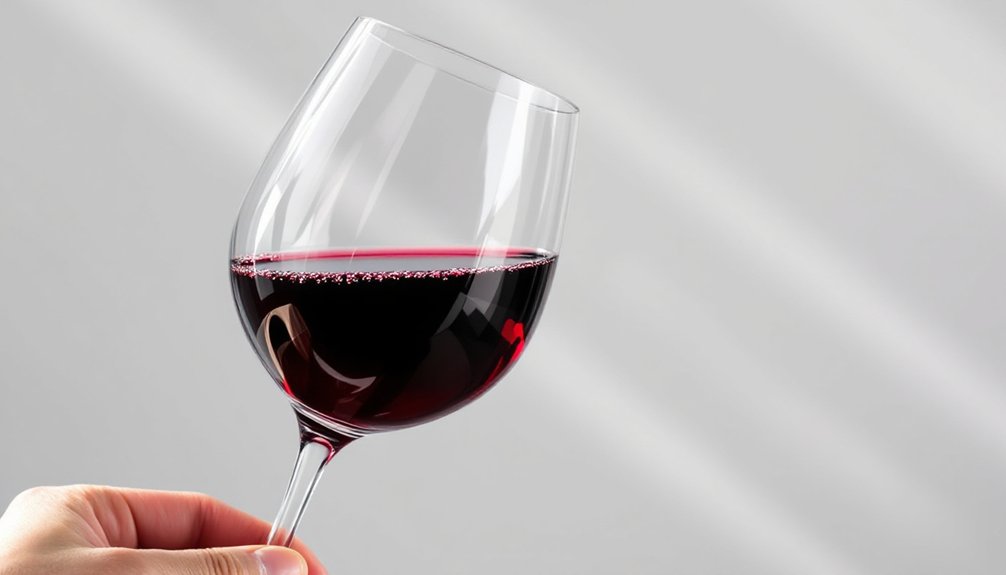
Three essential steps form the foundation of wine tasting for beginners: look, smell, and taste.
You'll want to start by holding your glass at a 45-degree angle against a white background, examining the wine's color and clarity. Notice how light passes through the glass and observe the wine's intensity, from pale straw to deep purple.
Next, you'll need to give your wine a gentle swirl – this releases the aromatic compounds. Hold the glass about 2 inches from your nose and take short, quick sniffs rather than one long inhale. You'll detect primary aromas (from the fruit), secondary aromas (from fermentation), and tertiary aromas (from aging).
Finally, it's time to taste. Take a sip and let it coat your tongue completely. You're looking for five key components: sweetness (detected on the tip of your tongue), acidity (sides of your tongue), tannins (that dry sensation), alcohol level (warmth in your throat), and body (the wine's weight in your mouth).
Don't feel pressured to identify every nuance – start with broad categories like "fruity" or "earthy" and you'll develop more specific descriptors as your palate evolves.
Identifying Wine Structure
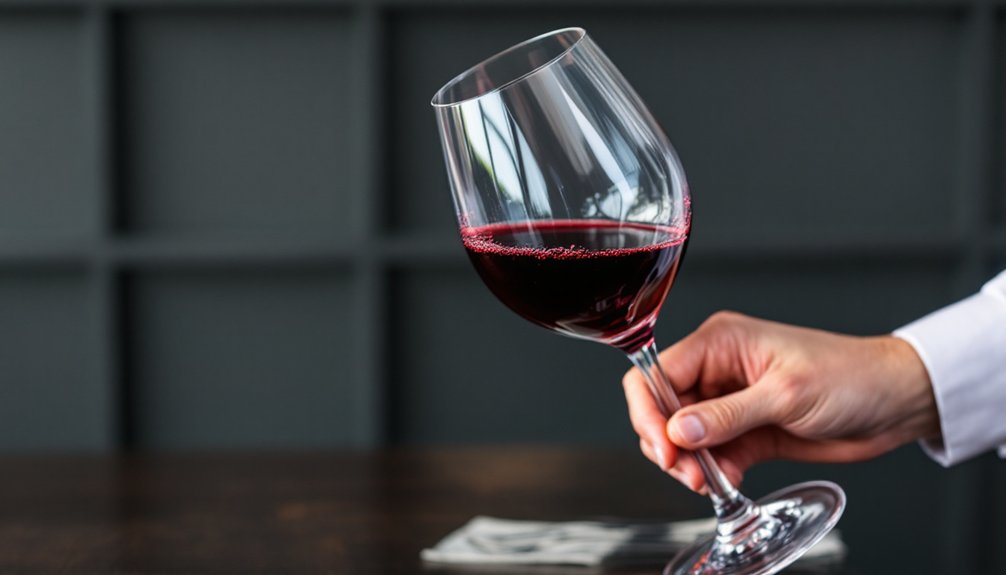
Understanding wine structure helps you evaluate a wine's fundamental components and how they interact. When you're appraising a wine's structure, you'll need to focus on four key elements that work together to create the wine's overall profile and mouthfeel.
- Acidity: You'll feel this as a tart, mouth-watering sensation on the sides of your tongue, ranging from crisp in Rieslings to subtle in Chardonnays.
- Tannins: These create a drying, astringent feeling, particularly noticeable in red wines like Cabernet Sauvignon, where they grip your tongue's surface.
- Alcohol: You'll detect this as warmth in your mouth and throat, typically ranging from 11% to 15% in table wines.
- Body: This refers to the wine's weight and texture, from light-bodied Pinot Grigio to full-bodied Syrah.
To evaluate structure properly, take a sip and let it coat your entire mouth. Pay attention to how these elements balance each other – a high-acid wine might need more body to feel balanced, while high-tannin wines often benefit from higher alcohol content.
You'll find that with practice, identifying these structural components becomes second nature.
Wine Flavor Profiles
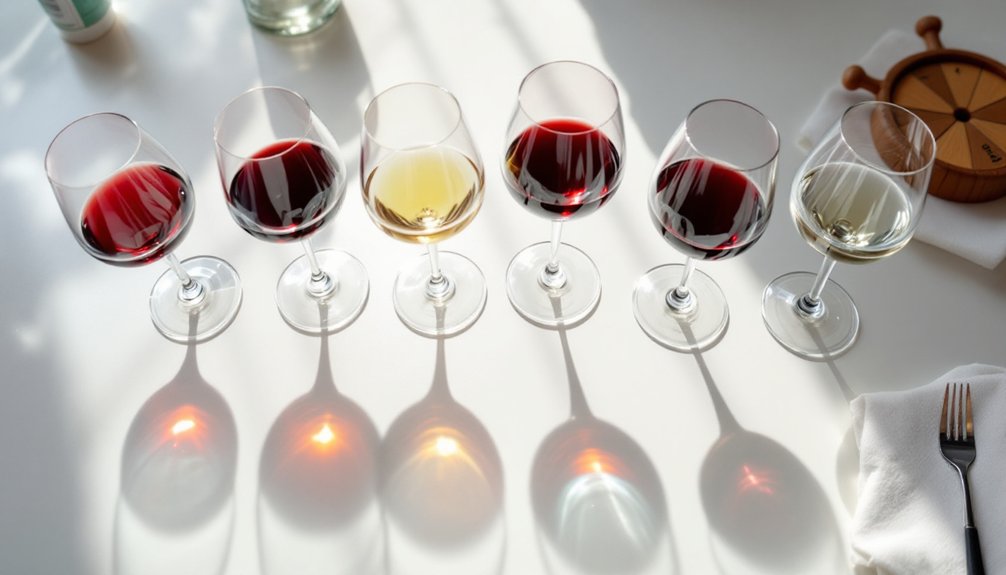
Countless flavors emerge from a wine glass, ranging from primary fruit notes to complex tertiary aromas that develop with age.
You'll discover primary flavors that come directly from the grape, including fresh fruits in white wines (like citrus, apple, and pear) and berries in reds (such as cherry, plum, and blackberry). These fundamental characteristics form your wine's foundation.
Secondary flavors develop during fermentation and oak aging, where you'll detect vanilla, toast, baking spices, and that distinctive buttery note in Chardonnay.
When you're tasting a wine that's been aged in French oak, you might notice subtle coconut and caramel undertones.
The tertiary flavors, which you'll find in older wines, offer fascinating layers of leather, tobacco, dried fruit, and forest floor. In aged red Bordeaux, you'll often encounter these complex notes after 8-10 years of cellaring.
As you explore different wines, you'll notice how climate affects these profiles – warm regions produce riper, more concentrated fruit flavors, while cooler areas yield brighter, more acidic notes with pronounced herbal characteristics.
Taking Effective Tasting Notes
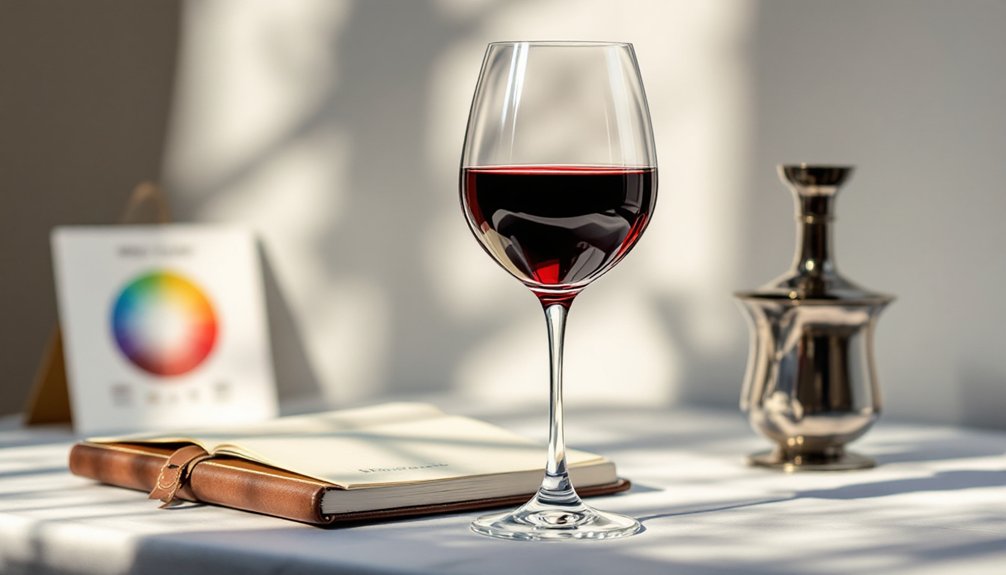
To capture and remember the intricate flavors you've discovered in your wine, keeping detailed tasting notes will sharpen your palate and build your wine knowledge. A structured approach to note-taking guarantees you'll document every important aspect of your tasting experience while developing a valuable personal wine reference library.
Start by recording these essential elements for each wine you taste:
- Basic information: Producer, vintage, region, grape varietals, price point, and date of tasting
- Visual observations: Color intensity, clarity, viscosity, and any unique characteristics like bubbles or sediment
- Aromatic profile: Primary fruit notes, secondary fermentation aromas, and tertiary aging bouquets
- Taste components: Sweetness level, acidity, tannin structure, body, alcohol content, and finish length
You'll want to use a consistent format, whether it's a specialized wine journal or digital app.
Don't hesitate to sketch flavor wheels or rate wines on a numerical scale – these visual aids will help you track your preferences over time.
Remember to note the wine's serving temperature and any food pairings you've tried, as these factors greatly influence your tasting experience.
Final Thoughts
You're now equipped with an absolutely staggering arsenal of wine-tasting skills that'll transform you from a casual sipper into a masterful connoisseur. Whether you're detecting those elusive black cherry notes in a Cabernet Sauvignon or discerning the precise acidity levels in a crisp Riesling, you'll approach each glass with newfound confidence. Remember, mastering wine tasting isn't just about technical expertise – it's about cultivating your own remarkable journey through the world of wine.