Just as a master painter selects specific colors to create depth in their work, you'll find distinct health benefits in each grape variety's unique pigments and compounds. When you're choosing between red, green, Concord, or Muscadine grapes at your local market, you're actually selecting from nature's pharmacy – each type offering its own therapeutic properties. The science behind these differences reveals why incorporating multiple varieties into your diet can transform your wellness strategy.
Key Highlights
- Red grapes contain 30% more polyphenols than green grapes, offering superior antioxidant protection and anti-inflammatory benefits.
- Concord grapes are rich in anthocyanins, which improve blood vessel health and enhance insulin sensitivity.
- Muscadine grapes provide the highest concentration of ellagic acid for immune function and help reduce total cholesterol levels.
- Green grapes have higher water content and essential flavonoids that combat oxidative stress and support overall health.
- Regular grape consumption can reduce heart disease risk by 30%, with darker varieties providing better blood sugar control.
Nutritional Composition Across Grape Varieties
While both red and green grapes offer impressive nutritional profiles, they're distinguished by subtle yet significant differences in their composition.
You'll find that red grapes pack slightly more calories and sugar, containing about 69 calories and 17.3g of sugar per 100 grams, while green grapes offer enhanced hydration with their higher water content of 79.9g per 100 grams.
When it comes to essential nutrients, both varieties deliver substantial potassium content, supporting your cardiovascular health, with red grapes providing 229mg and green grapes offering 218mg per 100 grams.
You'll benefit from vitamin K in both varieties, vital for bone health.
What sets red grapes apart is their higher concentration of antioxidants, particularly resveratrol and anthocyanins, making them especially valuable for their enhanced health benefits.
Antioxidant Properties of Red vs. Green Grapes
The remarkable antioxidant content in grapes stands as a defining feature of these beloved fruits, with red and green varieties offering distinctly different profiles.
You'll find that red grapes pack a powerful punch with their superior antioxidant capacity, containing 30% more polyphenols than their green counterparts.
Here's what you need to know about these grape varieties' antioxidant profiles:
- Red grapes are rich in anthocyanins, boosting cardiovascular health and fighting inflammation.
- Green grapes provide essential flavonoids that combat oxidative stress.
- Resveratrol, found primarily in red grape skins, offers unique cancer-fighting potential.
While green grapes contribute to your overall health benefits, red grapes' higher antioxidant levels make them particularly valuable for their anti-inflammatory properties.
You'll get the most extensive health advantages by including both varieties in your diet.
Heart Health Benefits by Grape Type
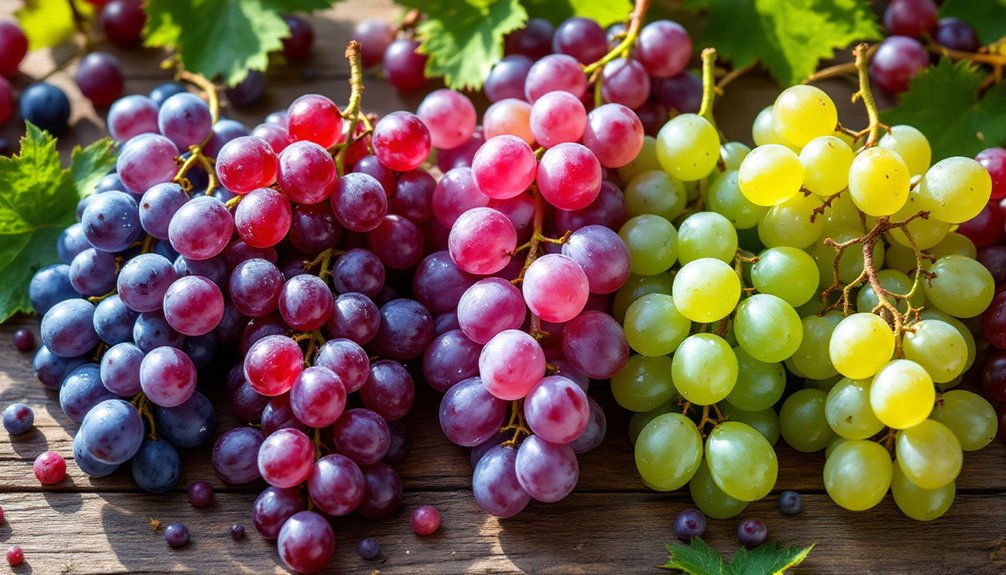
Since different grape varieties offer unique cardiovascular benefits, you'll want to understand how each type supports your heart health in distinct ways. You'll find that red grapes excel at lowering blood pressure through resveratrol, while Concord grapes' anthocyanins improve blood vessel function. Green grapes' flavonoids help reduce arterial stiffness, making them excellent for circulation.
| Grape Type | Heart Benefits | Impact on Health |
|---|---|---|
| Red Grapes | Resveratrol | Lowers LDL & Blood Pressure |
| Concord | Anthocyanins | Enhances Blood Vessel Health |
| Muscadine | Flavonoids | Reduces Total Cholesterol |
When you're looking to maximize cardiovascular health, consuming whole grapes regularly can reduce your heart disease risk by 30%. Each grape variety contributes differently to your heart health, so incorporating multiple types into your diet provides extensive cardiovascular protection.
Blood Sugar Impact of Different Varieties
Beyond their cardiovascular advantages, different grape varieties demonstrate varying effects on your blood sugar management.
You'll find that red and black grapes, particularly Concord grapes, offer enhanced insulin sensitivity due to their high resveratrol content. When you're choosing grapes for your balanced diet, consider their moderate glycemic index of 49-59 and natural sugars content.
Here's what you need to know about managing blood sugar with grapes:
- Portion control is essential – stick to one cup serving size, containing 23g of natural sugars.
- Red and black varieties provide superior blood sugar benefits compared to green grapes.
- Pairing grapes with protein or healthy fats helps stabilize your blood sugar response.
For ideal health benefits, select darker varieties like Concord or Red Globe grapes, which offer the most favorable impact on blood sugar levels.
Cancer-Fighting Compounds in Dark Grapes

Powerhouse compounds within dark grape varieties offer remarkable cancer-fighting potential that you'll want to understand.
When you're selecting grapes, you'll find that varieties like Concord and Cabernet Sauvignon contain high levels of antioxidants, particularly resveratrol, which actively inhibits cancer cell growth.
The grape seed extract you'll find in these dark varieties packs a punch with proanthocyanidins that suppress tumor growth in breast and colon cancers.
You'll be interested to know that muscadine grape skin specifically targets prostate cancer cells, while the bioactive compounds in all dark grapes help combat oxidative stress in your body.
For ideal cancer prevention benefits, you should consider incorporating these varieties into your diet regularly, as they're proven to promote the natural death of cancerous cells through multiple protective mechanisms.
Immune-Boosting Elements by Variety
When exploring the immune-boosting potential of different grape varieties, you'll discover that each type offers its own unique defensive properties.
Red grapes lead the pack with their impressive vitamin C content, while Concord grapes deliver powerful antioxidants and natural antimicrobial properties that help your immune system fight off invaders.
- You'll find that Muscadine grapes pack the highest concentration of ellagic acid, enhancing your immune function.
- Red grape varieties offer 4.8 mg of vitamin C per cup, strengthening your body's defense mechanisms.
- White grapes contribute essential polyphenols that combat oxidative stress in your system.
The hydration factor shouldn't be overlooked – grape varieties' high water content supports your mucosal membranes, creating a vital barrier against pathogens.
Whether you prefer red, white, or specialty varieties, you're getting valuable immune support with every bite.
Digestive Benefits of Common Grape Types
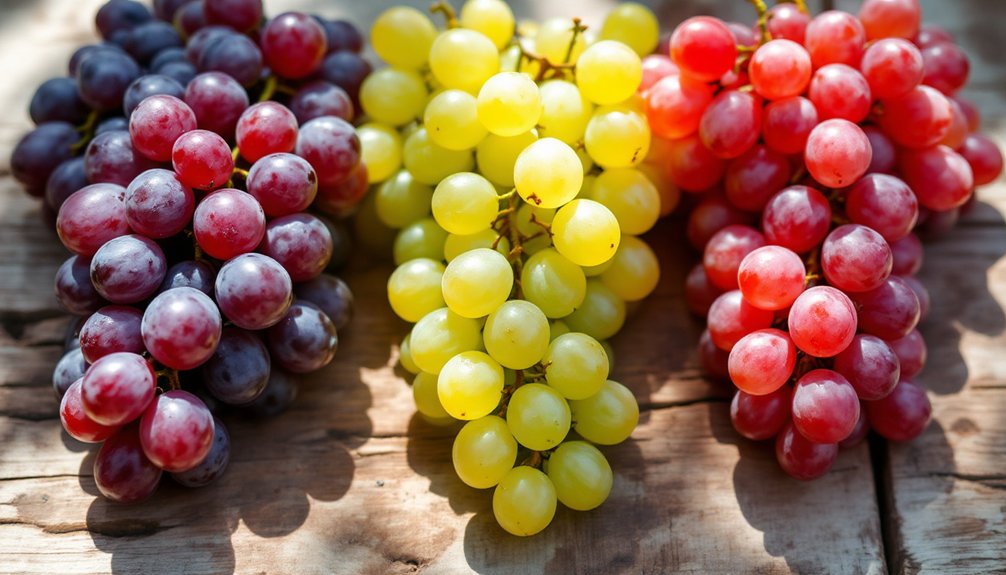
Different grape varieties offer remarkable benefits for your digestive system, with each type bringing its own unique contributions to gut health. You'll find that common grape types contain varying levels of dietary fiber and water content, which work together to support healthy digestion. The grape antioxidants you'll encounter help reduce inflammation in your digestive tract, while natural sugars promote improved gut health through beneficial bacteria growth.
| Grape Variety | Fiber Content | Digestive Benefits |
|---|---|---|
| Concord | High | Supports regularity |
| Thompson | Medium | Enhanced hydration |
| Red Globe | Medium-high | Reduces inflammation |
| Muscadine | Very high | Maximum fiber impact |
When you're considering weight management, these fruits can help control calorie intake while providing essential nutrients for digestive health.
Eye Health Support From Grape Pigments
The vibrant pigments that give grapes their distinctive hues also play a crucial role in protecting your eye health. These powerful compounds, including lutein and zeaxanthin, work together with resveratrol from grape skins to shield your retinal cells from UV damage and combat age-related macular degeneration.
Here's how grapes support your vision:
- They contain antioxidants that fight oxidative stress linked to degenerative eye conditions.
- Their compounds improve blood circulation, helping prevent diabetic retinopathy.
- Natural grape extracts enhance retinal function and preserve vision health.
You'll find these eye-protective benefits in both red and white varieties, though darker grapes typically contain higher concentrations of beneficial compounds.
Regular consumption can provide cumulative protection for your eyes, making grapes a smart addition to your diet for long-term vision support.
Frequently Asked Questions
Which Grape Has the Most Health Benefits?
You'd think wine grapes steal the show, but red grapes are your healthiest bet. They're packed with resveratrol, which'll boost your heart health and get your blood flowing smoothly.
Do Different Grapes Have Different Benefits?
You'll find distinct benefits in each grape variety: red grapes fight inflammation, green grapes boost immunity, Concord grapes enhance memory, black grapes support heart health, and muscadines combat cancer.
Which Grapes Are Healthiest Red or Black?
Like two champions in a race, black grapes edge out red ones with slightly higher antioxidant levels, but you'll get fantastic health benefits from both varieties in your diet.
Which Grapes Have the Most Resveratrol?
You'll find muscadine grapes contain the highest resveratrol levels, followed by thick-skinned red grape varieties like Cabernet Sauvignon and Merlot, which have 50-100 times more than white grapes.
Final Thoughts
You'll find that each grape variety offers distinct health advantages, making a mixed approach ideal. While red grapes excel at cardiovascular support through resveratrol, green varieties provide superior hydration and antimicrobial benefits. Consider incorporating Concord grapes for blood sugar control and Muscadine for immune strength. The evidence suggests that rotating between varieties throughout the week maximizes your intake of diverse beneficial compounds.