Like a symphony conductor orchestrating multiple instruments, you’ll find that mastering wine flavor perception requires attention to several key techniques. You’ve probably noticed that wine can taste different under varying circumstances, and that’s because its flavors are influenced by multiple factors you can control. From choosing the perfect glass shape to understanding the role temperature plays in releasing aromas, there’s an entire world of enhancement methods that can transform your wine experience. Let’s explore how you can unveil the full potential of every bottle you open.
Key Highlights
- Choose appropriate glassware shapes that concentrate aromas and direct wine flow to specific areas of the palate.
- Serve wines at their optimal temperature range to maximize aromatic expression and structural balance.
- Swirl wine gently to release hidden aromas and enhance flavor compounds through controlled oxidation.
- Use palate cleansers like crackers or sparkling water between tastings to maintain accurate flavor perception.
- Engage multiple senses by examining color, aroma, texture, and temperature during wine tasting.
Proper Glass Selection
A wine glass’s shape and design greatly influence how you experience wine’s aromas and flavors. The glass’s bowl size, rim diameter, and overall architecture work together to concentrate volatile compounds and direct them to your nose, which accounts for nearly 80% of what you’ll taste.
You’ll notice this especially with traditional Burgundy glasses, which feature wide bowls that capture delicate Pinot Noir aromas.
When you’re selecting glasses, you’ll want to match them to your wine type. For full-bodied reds like Cabernet Sauvignon, choose tall glasses with broad bowls that allow the wine to breathe and soften its tannins.
If you’re enjoying aromatic whites like Riesling, opt for smaller bowls with slightly tapered rims that concentrate the floral notes.
For sparkling wines, the traditional flute, which preserves carbonation, has largely given way to tulip-shaped glasses that better showcase complexity while maintaining effervescence.
You’ll find that quality crystal stemware, with its microscopically rough surface, creates more bubbles in sparkling wine than smooth glass does, enhancing both the visual appeal and taste experience.
Temperature Control Methods
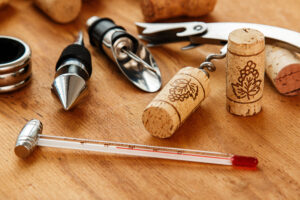
Proper temperature control stands as one of the most essential factors in wine service and enjoyment. You’ll find that serving temperatures can dramatically affect a wine’s aromatics, structure, and overall flavor profile, making it vital to master this aspect of wine service.
For red wines, you’ll want to aim for temperatures between 60-68°F (15-20°C), though you’ll need to adjust within this range based on the wine’s body. Fuller-bodied reds like Cabernet Sauvignon show best at 65°F, while lighter reds such as Pinot Noir excel at 60°F.
White wines require cooler serving temperatures, typically between 45-55°F (7-13°C), with crisp Sauvignon Blancs needing the coolest temperatures and fuller Chardonnays showing better slightly warmer.
You can achieve these temperatures using various methods: wine refrigerators with multiple temperature zones, ice buckets for quick chilling, or simply planning ahead with refrigerator timing.
If you’re in a pinch, you can chill a bottle in 20 minutes using an ice-water bath with a handful of salt added, or warm a too-cold bottle by placing it in lukewarm water for 10 minutes.
Swirling and Aerating
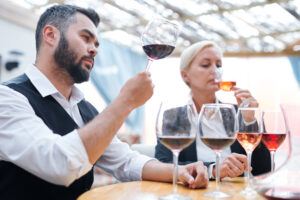
Movement plays an essential role in releasing wine’s hidden aromas and flavors. When you swirl your wine glass, you’ll notice how the liquid creates a vortex, coating the sides of the glass and increasing the surface area exposed to air. This motion helps volatile aromatic compounds escape, making them more readily detectable by your nose and palate.
You’ll want to master two primary aeration techniques. First, there’s the classic glass swirl, where you’ll hold the stem and create gentle circular motions for 5-10 seconds. If you’re new to swirling, try practicing with your glass on a flat surface to avoid spills.
Second, there’s deliberate aeration through decanting or using an aerator device. You’ll find that younger, more tannic wines particularly benefit from 30-60 minutes of aeration, while delicate aged wines might need just 15 minutes.
The science behind aeration involves oxidation and evaporation. When wine interacts with air, harsh tannins soften, and complex aromatic compounds emerge.
You’ll notice how a wine that initially seems closed-off will gradually reveal layers of fruit, spice, and mineral notes after proper aeration.
Palate Cleansing Practices
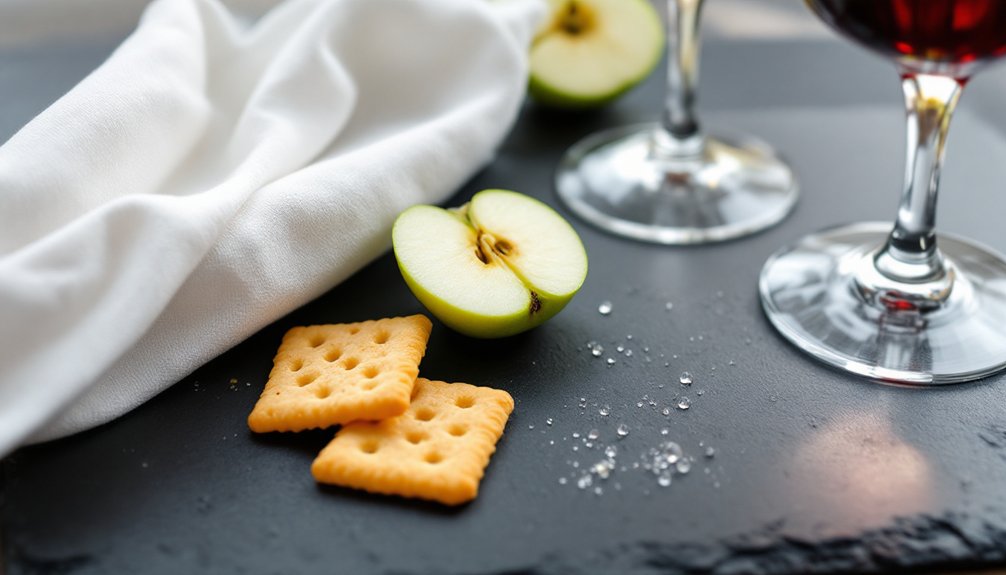
After experiencing wine’s aromatic qualities through aeration, maintaining a clean palate becomes your next priority. Your taste buds need regular rejuvenation to accurately detect the subtle flavor compounds that make each wine unique.
While water serves as the most basic palate cleanser, you’ll find several proven methods that professional sommeliers regularly employ.
Between wine tastings, you’ll want to take into account these effective palate cleansing options:
- Plain, unsalted crackers or white bread, which absorb residual flavors while neutralizing acid compounds that can linger on your tongue
- Sparkling water with a neutral pH of 7.0, which helps remove tannins and cleanses your palate without leaving additional flavors
- Small bites of mild green apple, particularly Granny Smith varieties, which provide natural malic acid that resets your taste receptors
You’ll notice that timing matters when cleansing your palate. Wait approximately 30-45 seconds after cleansing before tasting your next wine, allowing your palate to fully reset.
During professional tastings, you’ll often find designated cleansing stations with these items readily available, ensuring consistent flavor perception throughout extended tasting sessions.
Senses Beyond Taste
While your taste buds play an essential role in wine appreciation, experiencing wine’s full character demands engagement of multiple senses. Your sense of smell, which contributes to nearly 80% of flavor perception, detects thousands of aromatic compounds that create wine’s complex bouquet.
When you’re examining a wine, you’ll want to engage your visual sense first, tilting the glass to observe its color, opacity, and viscosity. Your sense of touch comes into play through the wine’s temperature, texture, and mouthfeel, while your inner ear helps you perceive the effervescence in sparkling wines.
Even sound plays a subtle role – the gentle pop of a cork and the crystalline ring of fine glassware contribute to your overall sensory experience. You’ll notice that professional tasters often close their eyes while evaluating wine, allowing them to focus more intensely on the interplay between smell, taste, and touch.
The temperature of service, typically 45-65°F depending on the wine style, affects how volatile aromatic compounds reach your nose, making proper serving temperature vital for ideal sensory perception.
Wine Service Timing
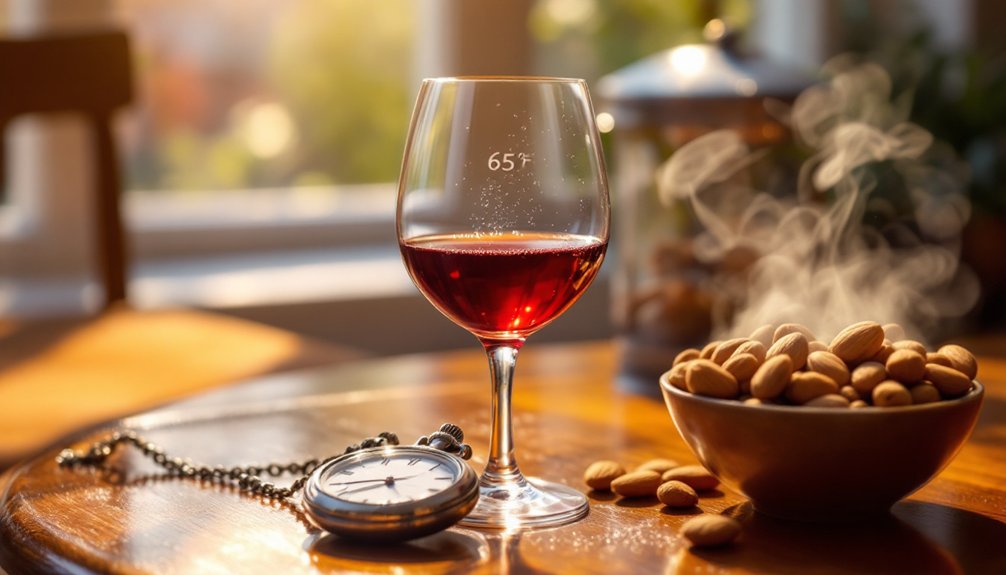
The timing sweet spot for serving wine can greatly impact your tasting experience. When you’re planning to open a bottle, you’ll need to take into account both temperature and aeration time to maximize the wine’s aromatic and flavor potential.
Most red wines show their best characteristics when served between 60-65°F (15-18°C), while white wines typically shine at 45-50°F (7-10°C).
You’ll want to plan ahead with your timing, especially for full-bodied reds that benefit from breathing. Here’s what you should keep in mind for ideal service timing:
- Full-bodied reds like Cabernet Sauvignon need 45-60 minutes of decanting to showcase their complex tannins and layered flavors
- Medium-bodied wines such as Merlot or Sangiovese require 20-30 minutes to open up
- Light whites and rosés are ready to serve after 10-15 minutes of chilling from room temperature
Remember that a wine’s character evolves in the glass throughout your drinking experience.
You’ll notice that the first sip often differs from those that follow, as the wine continues to develop with exposure to air and temperature changes.
Don’t rush the process – proper timing guarantees you’ll experience the wine’s full expression.
Final Thoughts
You’ll find that mastering these wine perception techniques transforms your tasting experience from ordinary to extraordinary. As you’ve learned, proper glassware, temperature control, and mindful aeration aren’t just formalities – they’re essential tools for revealing wine’s hidden complexities. Whether you’re a novice or connoisseur, implementing these methods will heighten your sensory awareness and deepen your appreciation of each carefully crafted vintage. The journey to wine enlightenment begins with these fundamental skills.